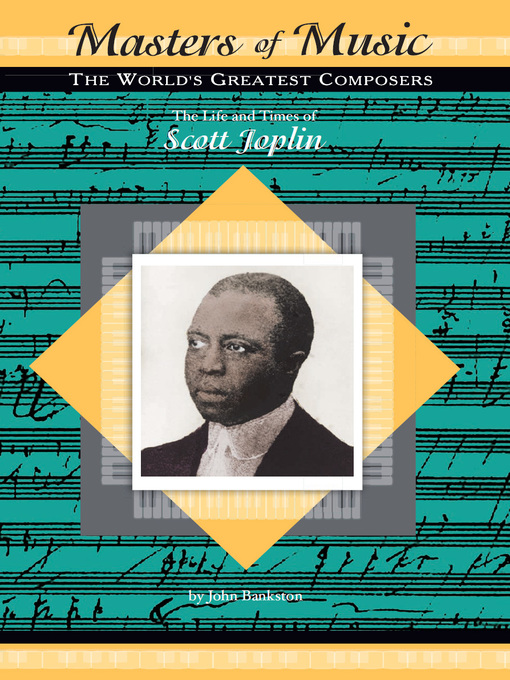
As a member of the first generation of African Americans who were born just after the end of slavery, Scott Joplin faced a world of unique challenges. His musical family scraped out a living by sharecropping and cleaning houses—but Scott was exceptionally gifted, and his mother made sure he got piano lessons. Classically trained, he spent several years playing in churches and saloons. While for a time he wanted to compose classical music, he was drawn to ragtime, an early form of jazz that featured African folk tunes and syncopated rhythms. After his first composition, "Maple Leaf Rag," was published in 1899, Scott Joplin was able to keep ragtime popular for the next two decades. In fact, ragtime influences can be heard in later forms of music, such as jazz, blues, and even rock and roll. Scott Joplin, the Father of Ragtime, whose compositions cut across geography, race, and class, was truly a Master of Music.
- Newly Added eBooks - Available Now
- The Hit List (Books We Love)
- Top 500 eBook Fiction
- Top 500 eBook Nonfiction
- Popular Romance
- Books you may have missed
- Health & Fitness
- Business Biographies
- Fantasy
- Historical Fiction
- Thrillers
- Crime
- Self-Enrichment
- See all ebooks collections
- Newly Added Audiobooks - Available Now
- Top 500 Audiobook Fiction
- Top 500 Audiobook Nonfiction
- Business Biographies
- Business & Management
- Self-Enrichment
- Audiobooks for your commute
- Thrillers
- Foreign Language Study
- Humour
- See all audiobooks collections
- Newly Added
- Children’s Favorite Characters
- Most Popular Children's Titles
- Comic & Graphic Books
- Children's Read-Alongs
- Popular Teen Reads
- Armchair Explorers for Children and Teens
- Science Fiction & Fantasy - Available Now
- Roald Dahl Collection
- Popular eBooks
- See all children & teen collections
- Chinese Titles - Adult
- Chinese Titles - Young Adults
- Chinese Titles - Children's
- 中文书籍
- Malay Titles - Adults
- Malay Titles - Young Adults
- Malay Titles - Children's
- Tamil Titles
- Tamil Titles - Children's
- See all language collections collections