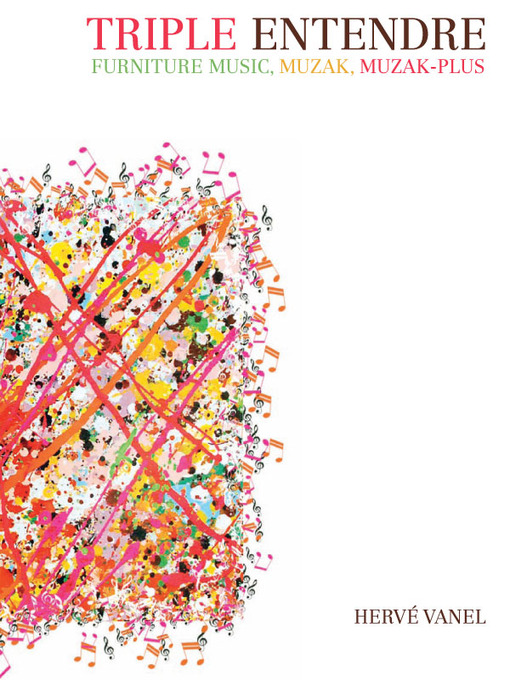
Vanel's discussion culminates in the creative response of the composer John Cage to the pervasiveness and power of background music in contemporary society. Cage neither opposed nor rejected Muzak, but literally answered its challenge by formulating a parallel concept that he called "Muzak-Plus." Forty years after Satie presented his work to general critical puzzlement, Cage saw how background music could be combined with mid-century technology and theories of art and performance to create a participatory soundscape on a scale that Satie could not have envisioned, again reconfiguring the listener's stance to music. By examining the subterranean connections existing between these three formulations of a singular idea, Triple Entendre analyzes and challenges the crucial boundary that separates an artistic concept from its actual implementation in life.
| Cover Title Contents Preface: Cage Free Introduction Chapter 1. Furniture Music: A Musical Irresolution by Erik Satie Chapter 2. Muzak Incorporated Chapter 3. Muzak-Plus and the Art of Participation Conclusion: The Community to Come Notes References Index | Certificate of Merit for Best Historical Research on General Recording Topics, Association for Recorded Sound Collections (ARSC), 2014. — Association for Recorded Sound Collections (ARSC)|Hervé Vanel teaches art history at The American University of Paris. He is the author of Le Parti Commoniste: Roy Lichtenstein et l'Art Pop and the editor of Francis Bacon, Entretiens.