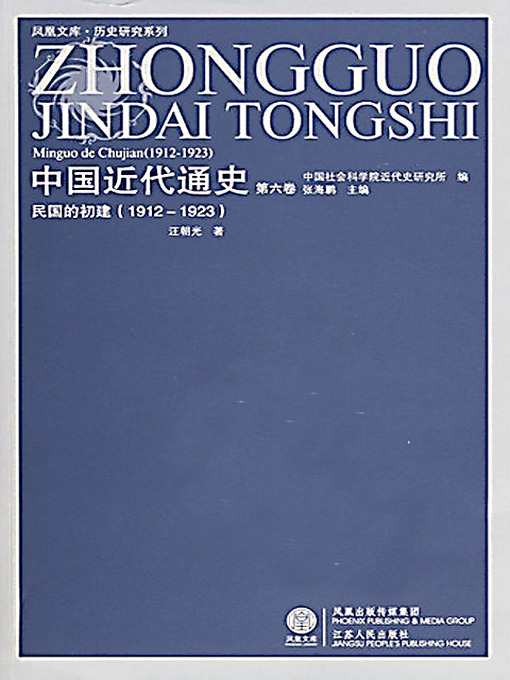
20世纪对于中国近代史研究来说,是开端的世纪,是转型的世纪,是创新的世纪,也是收获的世纪。中国近代史研究是20世纪中国历史学的一个重要分支。20世纪中国历史从半殖民地半封建社会转变到社会主义社会,发生了翻覆地的变化。20世纪中国近代史研究也发生了翻天覆地的变化,它从传统中国历史学中分离出来,在30—40年代为半殖民地半封建社会服务的、代表统治阶级利益的资产阶级倾向的中国近代史研究占统治地位,马克思主义为指导的中国近代史研究在新民主主义革命中产生,新中国建立以后,马克思主义的中国近代史研究逐占了主导地位。
China's Modern History has ten volumns with a total of 5 million words. It was collectively compiled by the Institute of Modern History of the Chinese Academy of Social Science, as a condensation of the hard work of several generations of Chinese historians. By far, it is the most complete version of general history of modern china.
The collection focuses on four key topics in China's modern history. The first is that of China's conflict with an aggressively expanding West in the 1800s, beginning with the demands made by England at the end of the eighteenth century; England, as was true with the other imperial powers, was intent on "opening up" trade with China. Chinese denials for trade on England's terms eventually led to several wars which concluded by imposing "unequal" treaties that by the end of the century threatened to carve up China "like a melon."
A second key topic is that of the internal crises that were occurring in China at this time: the rebellions, famines, and explosive population growth of the eighteenth and nineteenth centuries. Many of these issues were not new to the empire, but the extent and the timing of their challenge was crucial, coming at the same time as foreign encroachments.
A third major topic is that of the dialogue within China about how best to respond to these combined challenges and the extent and nature of the changes that were required. Dialogue about reform was many-faceted, and it vacillated between the progressive combinations of elements from the West with the best of Chinese traditions, to the outright rejection of the Chinese past. Finally, by the 1920s, some reformers turned revolutionary, discussing the relevance of Marxism for China.
The fourth major topic is that of the Chinese communist revolution that unfolded in China in the 1930s and 1940s and the particular role played by Mao Zedong (Mao Tse-tung) in adapting Marxism to the Chinese situation.