Error loading page.
Try refreshing the page. If that doesn't work, there may be a network issue, and you can use our self test page to see what's preventing the page from loading.
Learn more about possible network issues or contact support for more help.
Title details for New Paternalism Meets Older Wisdom by Erik W. Matson - Available

New Paternalism Meets Older Wisdom

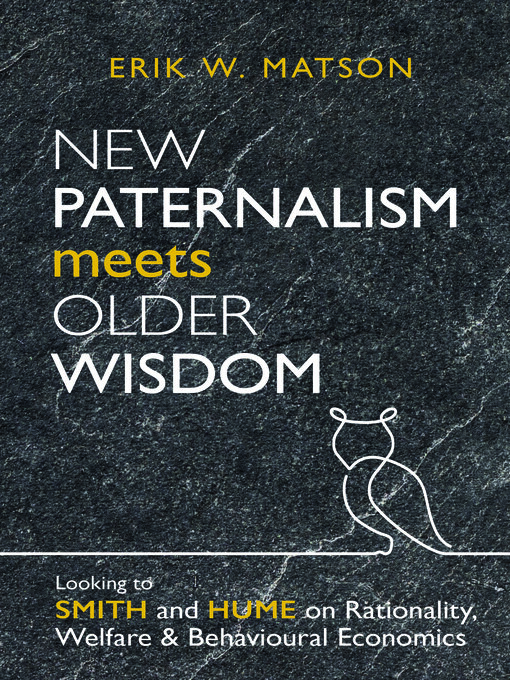
ebook
What can today's behavioural economists learn from the classical liberals of the past? Here, Erik Matson offers critical reflections on what he calls 'the new paternalism' – a modern-day approach to policy-making that aims to make individuals better off, when judged by their own standards. He argues that the new paternalist approach to policy is far too prescriptive, relying on inappropriate conceptions of rationality and welfare. And he looks to the works of two giants of economics and philosophy – Adam Smith and David Hume – for a richer vision. He places Smith and Hume's 18th-century writings into a contemporary context – and concludes that today's practitioners could learn much from their wisdom. This wisdom, he contends, acknowledges the deep complexities of rationality and welfare. It shows why policymakers should focus on securing citizens the freedom to cultivate their interests, and why regulators should employ the power of persuasion – rather than paternalism – to help individuals help themselves.|What can today's behavioural economists learn from the classical liberals of the past? Here, Erik Matson offers critical reflections on what he calls 'the new paternalism' – a modern-day approach to policy-making that aims to make individuals better off, when judged by their own standards. He argues that the new paternalist approach to policy is far too prescriptive, relying on inappropriate conceptions of rationality and welfare. And he looks to the works of two giants of economics and philosophy – Adam Smith and David Hume – for a richer vision. He places Smith and Hume's 18th-century writings into a contemporary context – and concludes that today's practitioners could learn much from their wisdom. This wisdom, he contends, acknowledges the deep complexities of rationality and welfare. It shows why policymakers should focus on securing citizens the freedom to cultivate their interests, and why regulators should employ the power of persuasion – rather than paternalism – to help individuals help themselves.

Formats

  • OverDrive Read
  • EPUB ebook

subjects

Languages

  • English