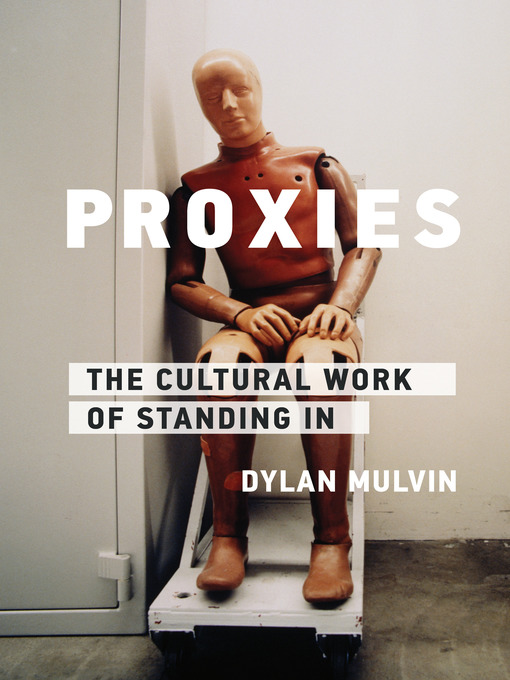
Our world is built on an array of standards we are compelled to share. In Proxies, Dylan Mulvin examines how we arrive at those standards, asking, "To whom and to what do we delegate the power to stand in for the world?" Mulvin shows how those with the power to design technology, in the very moment of design, are allowed to imagine who is included—and who is excluded—in the future.
For designers of technology, some bits of the world end up standing in for other bits, standards with which they build and calibrate. These "proxies" carry specific values, even as they disappear from view. Mulvin explores the ways technologies, standards, and infrastructures inescapably reflect the cultural milieus of their bureaucratic homes. Drawing on archival research, he investigates some of the basic building-blocks of our shared infrastructures. He tells the history of technology through the labor and communal practices of, among others, the people who clean kilograms to make the metric system run, the women who pose as test images, and the actors who embody disease and disability for medical students. Each case maps the ways standards and infrastructure rely on prototypical ideas of whiteness, able-bodiedness, and purity to control and contain the messiness of reality. Standards and infrastructures, Mulvin argues, shape and distort the possibilities of representation, the meaning of difference, and the levers of change and social justice.
-
Creators
-
Series
-
Publisher
-
Release date
August 17, 2021 -
Formats
-
OverDrive Read
- ISBN: 9780262361941
-
EPUB ebook
- ISBN: 9780262361941
- File size: 19756 KB
-
-
Accessibility
-
Languages
- English
Why is availability limited?
×Availability can change throughout the month based on the library's budget. You can still place a hold on the title, and your hold will be automatically filled as soon as the title is available again.
The Kindle Book format for this title is not supported on:
×Read-along ebook
×The OverDrive Read format of this ebook has professional narration that plays while you read in your browser. Learn more here.